And the catholics are pissed because?

Image via http://www.wtsp.com. Click this link to see the video at wtsp.com.
A few days ago I got an e-mail complaining about this ad and I watched it. The e-mail was petitioning me to go somewhere and sign up against the commercial because it "denigrated" the eucharist.
As long as you don't watch the commercial you might think that is true.
I grew up as a catholic so I understand some hints that are there for all to see except maybe for those dyed-in-the-wool catholicts who feel offended by this rather insipid depiction of religion. The "priest" is called "pastor", not "father" as would be the case if this were a catholic priest. The church is a traditional protestant church - no mistaking that arquitecture. Catholics do not keep files of new parishioners as if they were "applicants" for a job. And the flock is, well, very "diverse" - you see a hare krishna and an amish, a jew and a southern baptist... not very catholic.
And so on and so forth...
Religion is like that. People get so charged up with their own points of view that they lose sight of the bigger picture. There is no acceptance of other ways, my way is always the right way and dogma is king.
So, even though no mention is made, either explicit or implicit, that this is a catholic church, catholics get pissed. And again, I ask why?
See the commercial and judge for yourself. And also read this interesting commentary.
Share on Facebook

El significado de la verdad para la ciencia

En días recientes estuve discutiendo con un amigo el tema del cambio climático global o "calentamiento global", como normalmente se le denomina. Le decía yo que el consenso científico es que existe un cambio climático y que es de origen antropogénico. Mi amigo, que pertenece a una corriente de pensamiento político en términos generales opuesta a aceptar el cambio climático, me decía que no, que eso era una opinión y que la verdad objetiva no se establece en base a la opinión de la mayoría.

Me llamó mucho la atención el hablar de una "verdad objetiva". Sin entrar a discutir qué es una verdad objetiva, lo que le quiero decir a mi amigo es que para la ciencia, la "verdad" sí la establece la opinión de la mayoría, en base a la interpretación de la evidencia disponible; si la evidencia apunta en una dirección clara se habla de un consenso científico. El consenso se establece alrededor de una teoría, la cual podemos definir como una explicación que se ajusta a los hechos, que se ajusta a la evidencia tal y como la percibimos y tal y como está disponible en el momento.

Al momento la teoría indica que el cambio climático es real y que es de origen antropogénico.

Aquí es donde tenemos el problema de hablar de cosas diferentes. Mientras mi amigo busca una verdad objetiva (y parece pensar que él es quien está en posesión de la misma, la cual parece ser diferente del consenso científico), la ciencia ha establecido una "verdad provisional" representada por la teoría indicada. Sin embargo, la diferencia entre esta "opinión" científica y la opinión política de mi estimado y querido amigo (cero sarcasmo aquí) es que la comunidad científica está prontamente dispuesta a cambiarla por una nueva y mejorada teoría, una mejor explicación, que puede ser un giro radical, de 180° con respecto a la anterior. Todo lo que se necesita para cambiar a una nueva "verdad" (una teoría mejorada o distinta) es una ampliación del conocimiento sobre el fenómeno estudiado, en este caso, el cambio climático. Nuevos hechos y evidencia que salgan a la luz podrían motivar tal cambio de opinión.

Así que, a la luz del conocimiento actual y la evidencia, el cambio climático es, según el consenso de la comunidad científica, verdadero y de origen antropogénico. No voy a entrar a discutir esos hechos, pueden revisar alguna discusión sobre ellos en http://www.ncse.org/climate, así como un tema más cercano a casa por el Dr.. Edgar Cifuentes en https://guateciencia.wordpress.com/2015/01/06/cambio-climatico/. En el momento en que se introduzca nueva información y nueva evidencia, este consenso podrá variar.

Así que la ciencia no conoce una verdad objetiva, como la entiende mi amigo. Es una verdad variable, mutable y que puede evolucionar. Basta con ver como, en el transcurso del siglo pasado, los astrónomos pasaron de hablar de "nebulosas" a hablar de "galaxias", al entender que las nebulosas no eran nubes sino agrupaciones de una cantidad tal de estrellas que se encuentran tan distantes de la Tierra, que se ven como partículas de humo formando una nube (de allí el término nebulosa). Y ese es el poder del pensamiento y el método científico, la capacidad de poder evolucionar y cambiar la perspectiva, que ha conducido a los grandes avances de la ciencia de los últimos 200 años

Comentario de mi dilecto amigo el doctor Enrique Pazos:

Hola Anibal, pues yo concuerdo con tu punto de vista, totalmente. La confusión siempre se origina en el diferente uso de los términos, dependiendo del background de cada persona. Por ejemplo, cuando hablamos de consenso científico, estamos realmente diciendo que diferentes mediciones, hechas de forma independiente, nos muestran que la temperatura ha ido en aumento. Por lo tanto hay consenso científico.

La gente que cree que la ciencia cambia de opinión de la noche a la mañana es porque no están bien ubicadas en el panorama global de la ciencia. Por ejemplo, el caso que mencionas entre nebulosa y galaxia ilustra el punto. Allí la diferencia es semántica, pues la naturaleza de esos objetos no va a cambiar porque les pongamos un nombre u otro. Es el mismo caso de que si Plutón en planeta o no. Plutón será siempre el mismo objeto con sus mismas característas sin importar que le llamemos planeta o no. Muchas veces la gente cuyo conocimiento científico es superficial se agarra de estar discusiones semánticas para decir que la ciencia cambia de opinión. Es cierto que lo hace, pero este caso es solo en apariencia.

En el fondo, la ciencia se fundamenta en evidencia y la evidencia son hechos. Los hechos no están sujetos a discusión. Si uno desconfía de los hechos, lo que corresponde en que alguien más recolecte su propios hechos y evidencia. Esto es lo que ha pasado con el clima. Cada quien ha hecho sus mediciones. La gente puede equivocarse, pero es muy poco probable que todos se hayan equivocado de la misma manera, y que como resultado concuerden con que la temperatura esté en aumento.

Entonces, para estar en la misma frecuencia es necesario aclarar lo que entendemos por consenso y que los cambios semánticos son superficiales y no de fondo.

style> html .fb_share_link { padding:2px 0 0 20px; height:16px; background:url(http://static.ak.fbcdn.net/rsrc.php/z39E0/hash/ya8q506x.gif) no-repeat top left; }

Share on Facebook

The end of the world is coming and I am having a blast!


Completely unrelated to whatever crazy old Harold Camping might be thinking or doing is the fact that, for the last few months I have been having and continue to have one of the best times of my life.

And I want the party to go on!

But not cranky old Harold Camping. A retired civil engineer (I can't believe we share the same profession!) he has been spreading the word around the world that the end is to come on Saturday, May 21st. Two days from now.

And he has billboards in such places as Israel, Jordan, Lebanon and Iran! If anything, you have to admire his tenacity.

But he is not trustworthy. His prophecies have backfired on him at least once before, as he had already predicted the end of the world would be on September 6th, 1994. Either he was wrong or I am now living in the Matrix and have not noticed it.

His calculations for claiming the end of the world are downright ridiculous. First, he seems to assume the world is 6,000 years old, as fundamental christians like to believe. Then he places the year of the (non-existent) Flood as 4990 b.c.e and he adds 7000 years (because the bible says somewhere that 1000 years is like a day). Then he does some other cockamanied calculations to arrive at the May 21st. date. When asked, he says that on that day, at 6 in the evening there will be a huge earthquake. Where? Everywhere!

That is why it shames me to know he is an engineer. You would think a member of our time honored profession would know that it cannot be 6 pm everywhere in the world at the same time. It is all nonsense and a lot of crap.

Of course, people like me have been having a blast with the whole thing. Many other predictions of the end of the world have come and gone and nothing has happened, which causes even some christian church officials to denounce doom-sayers like Camping "because they give the church a black eye" when the alleged prophecy fails to happen.

Camping and his cohorts are up for another great disappointment, like the Millerite thing back in 1844. Unfortunately it seems that, like when other prophecies failed, their faith may be somehow reinforced and they will come up with all sorts of explanations as to why the Rapture failed to happen. Unless, of course, there is some "Kool Aid" involved and they are no longer around to explain themselves. We will see... on Sunday.

In the meantime - party on!


Little man, great man

Sai Baba - I got this image from another blog - sorry!

Last week a couple of interesting things happened.

First the little man, Sathya Sai Baba died, at age 84. He missed the mark by 12 years, since he had prophesied his death would occur at age 96, after which 8 years more would elapse before he would reincarnate.

I guess his miscalculation may mean he will not reincarnate. He may have missed the Reincarnation Express.

As mentioned before, Sai Baba was little - he was only about 1.57 meters tall. He became known as an avatar right in the middle of the peace and love era, the end of the sixties and the beginning of the seventies, when his afro look and his orange gowns blended well with the prevailing fashion and the rise of popularity of those oriental/indian beliefs in reincarnation and karma. Sai Baba seems to have been a skilled conjurer (watch this YouTube video) and he had a very long career (more than sixty years) in which he amassed a large fortune, which is now up for grabs.

No saint but just another merchant of faith, a pedophile and, possibly, a murderer. Little man, indeed.


On to the great man.

During the weekend, John Paul II was beatified. Sainthood claims aside I recently heard that how great a man you are depends on how big a void you leave when you go. It seems to me that, for better or for worse, Karol Wojtyla left a huge void indeed.

He presided over a momentous time in the history of Humanity, the fall of the Soviet Union and the establishment of free market and liberty over many formerly occupied countries. And to many, there is little doubt that he was one of the architects of that fall.

He also painted a good face on a decrepit institution. His many travels around the world and his skillful use of the media made him a familiar and welcome face in every home. While remaning a stern critic of other religions (he shared the same belief Pope Ratzinger proclaims, that the Catholic Faith is "superior") he did indeed approach other religious leaders and was the first Pope to visit a mosque and a sinagogue.

Of course, the reign of JPII is tainted by his dogmatism, his sponsorship of very conservative factions like the Opus Dei and his poor handling of the sex abuse scandals that rocked the whole Catholic institution from 2002 on. For that, he will always be criticized.

A saint? Depends on what you call sainthood. From the religious perspective, sainthood claims for the late pope hinge on the testimony of a lonely nun (is there any other kind?), Sister Marie Simon-Pierre, who claims her prayers to the late John Paul resulted in a miraculous cure from Parkinson's disease. While it remains to see if she really remains cured (she is not dead yet, so she has not lived a full disease-free life) and there are doubts about her mysterious and sudden "cure" the Vatican or, rather, Pope Ratzinger, fast-tracked the process so John Paul II could be quickly added to the already crowded catholic pantheon of saints.

But a great man? Basis my previous definition, definitely. He left his mark in both the secular as well as the religious arena, which cannot be ignored. He is missed by more than a few and that, too, cannot be ignored.


Share on Facebook

A different point of view


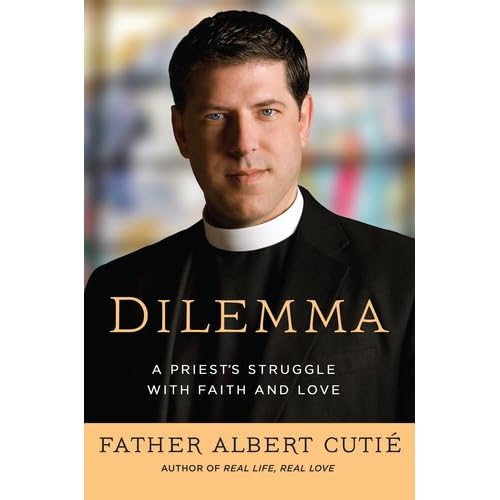
In a previous post (Another one bites the dust! May 6,2009) I told the story of father Alberto Cutié, who was caught red-handed kissing and caressing his girlfriend.

Now married, separated from the Catholic Church and a newly ordained priest in the Episcopal Church, father Alberto is back in the spotlight with his second book which, according to all accounts, is not kind on his former church.

As far as I can tell from watching interviews made promoting his book, father Alberto is accusing the church of nothing less than what I always said it suffers: Hipocrisy. It seems father Alberto's sin was not to have an affair but, rather, to be caught. He mentions how if the church got rid of all the priests and bishops involved in "inapropiate" relationships with both men and women, it would be so crippled it could not function anymore. And how many priests have deserted because of their inability to keep their vows.

Interestingly, during the last couple of weeks I had a couple of conversations with friends on related issues. One, with a former priest, who was a very good friend of mine in college. He told me how he was offered a parrish that he did not accept because the diocesis would not remove the other priest assigned to that place, who had a live-in girlfriend. And we talked about the monsignor who had a daughter with his housekeeper.

Later, during the weekend, I talked to another friend who also graduated from the same Jesuit school I did. He told me he had four classmates who had gone on to priesthood after high school. Of the four, only one remains an active priest.

In reality, I still like father Alberto, for his honesty. He was honest enough to leave the church and he is honest now to tell the truth about his dilemma. And he highlights what I already said is the problem: it's not the priests, it is the system. A corrupt and archaic institution still trying to make people into what they are not.

One of the many reasons I left all that make believe world behind.


Share on Facebook

Environmentalists and "tree-huggers"

Wind Turbine. Image from Wikipedia Commons.

A few days ago I wrote about my experiences with Big Oil. Little did I know that I would manage to upset a friend who posted a comment, which I am reproducing here:

"Tree-hugers huh? Don't you think that is a little harsh? Idealists are idiots until their ideas take momentum, after that they are known as visionaries. Not before.

Alternative energy doesn't work? Hell, that's were we will agree to disagree (being a wind turbine engineer and all).
Oil is only the cheapest ECONOMIC source of energ: it is dirty, chemically dangerous, prone to explosion, and its biggest charge is to the enviroment it is IRREPARABLY destroying. Plus, it is not renewable.

I don't want to live as if I were the last generation to use the earth, and I don't even have kids like you do.

Anyway, as I said, this is a point were we will have to agree to disagree.
I have a TREMENDOUS respect for you, and it is only such respect that allows me to retort; I know you are a rational person who will not corner me to the ground just because I think differently about a subject.

In any case, the best of lucks in your new endevours. All the best to you and your family. ^__^

Cheers,
-Arc"

I also have Arc in the highest of regards and this comment provides a footing to talk about some ideas I have been juggling in my head.

First, the use of the words "tree-hugger" is not casual - it is deliberate. I am certainly not very diplomatic when I am dealing with prejudiced or dishonest people and I find a lot of those in the "green" movement.

Before going any further, I am all for preserving the environment, as much as it is possible to reconcile such preservation with the needed economic development for poor people/countries. I think all life is precious and while I cannot accept the killing of one more marine mammal, for instance, I also think the life of some members of a rather abundant species of two-legged land mammals is also important to preserve.

However, the tree-huggers I am refering to are people who use the banner of the green movement in order to further their perverse agendas, which seemingly do not include the well being of many of those two-legged land mammals. I do not really understand what those agendas may be, if they exist at all: it seems to me that many of these infamous characters are in the game only for personal gain.

And they are dishonest. I was outraged last year when a well known (in my country) catholic bishop called a press conference in order to present his findings after conducting some water analysis in the neighborhood of a gold mine. He accused the mining company of poisoning the river with "heavy metals". What heavy metals? Aluminum, magnesium and silicon... some of the most abundant materials in the Earth's crust.

So, I stand by my use of the word tree hugger. I am an environmentalist, an advocate of conservancy, not of poverty and famine for those who could use a good job in a gold mine - as long as the mine complies with good environmental practices. But the tree huggers will have none of that and they want all those jobs to go away.

As for renewable energy, I am all for developing renewable and alternate energy sources. However, I don't think they are all quite ready for prime time.

My good friend Arc says he is a wind turbine engineer. Nice job. I like wind turbines. They are one of the most mature technologies for renewable/alternate energy around. Unfortunately, they have two shortcomings:

1) Mostly, they are not good for providing base energy as the wind does not always blow the same when you need it and 2) They are not that reliable as yet.

I tried to indicate that alternate energy would come into its own sometime later this century. Wind power is a good example. There is already work underway to make wind turbines more reliable, going to direct drive and avoiding those pesky, difficult to maintain gearboxes. Yes, Big Oil will suffer at not being able to sell lubricants to the wind turbines anymore (with direct drive) but I, for one, aplaud the idea as the gearbox is the weakest link in a power system comprising wind turbines.

And, I have to say, wind power is also attacked by the green movement. Migrating birds are killed by the spinning blades and pressure differentials between one side of the turbine and the other kills bats. I sympathize with the birds and the bats but I also believe that good locations can be found for those needed wind farms where they will make the least damage to the flying fauna.

Not that all of them will be spared. But you have to give some to get some, right? Which, would bring me back to the gold mine...

So, friend Arc. we do not disagree at all. We are in violent agreement. But it is all a matter of balancing the pros and the cons and coming up with the best solution for all - marine mammals, flying fauna and those insipid two-legged land dwellers that tree-huggers don't seem to consider worthy of conservation.


Share on Facebook

The end of an era (for me...)

This is me, about 20 years ago, a talk to customers. My bosses, in the background, watching...

Yesterday, after 20.6 years of working with Big Oil, my employment came to an end.

20.6 years is a lot. I always ask my kids if they remember seeing me working for another employer. Your personality becomes entangled with the company's and friends and family think of you when they see the company logo and viceversa... sometimes I think I have a star already engraved on my forehead!

I remember 20-something years when I was in need of a job and looked in many places... the story itself of how I began working with Big Oil is interesting. But in that time, with my youth ideals still fresh I used to think I would not work with the brewery or the distillery - I do not agree with the excess in drinking that these companies seem to promote. I didn't want to work for Big Tobacco either, even though they called... I think it is inmoral to help produce a product that causes disease and death. But Big Oil, even though twenty years ago did not have the greenest image did not look bad to me. Besides, I always sold lubricants, even then. No one seems to notice but, who can live without lubricants? (Even reproduction would be difficult...)

Anyway, Big Oil hired me at the toughest time in my life, recently married and with a child on the way. Watching shop windows full of baby clothes and stuff I could not buy. And, in time, it gave me enough to raise and educate my children, feed and clothe them, a good life - all these, things for which I am very grateful.

Besides, Big Oil gave me the opportunity to learn to manage a business with other people's money. I made mistakes that cost the company mone. They told me "don't do it again" and I moved on. I learned so many things... I don't think many people (certainly no more than 10) in Guatemala know so much about lubricants as I do. And I met many important poeple, some of which are now offering me employment... And I knew so many places, in Guatemala and elsewhere in the world, that I would have never visited if it were not for the job. All of which has enriched my life in a wonderful way.

I cannot neglect mentioning also the opportunity to work with so many talented colleagues and some extraordinary bosses ( I always think of Ralph when I think of good bosses). Many friends, many colleagues, many customers and acquaintances, relationships that I hope will be able to continue even though I am no longer with the company.

A great experience. I would not change those 20.6 years for anything. And I defend Big Oil. It is true that BP has messed with the industry's image with this big screw-up in the Gulf but the industry, generally speaking, is not irresponsible, in spite of how much the tree-huggers may crow.

And there is much to say about our dependence from oil. A few weeks ago, a local columnist was making an apology of alternative energy. Everything fine and dandy except it does not work. Yet. The cheapest source of energy available to us at the moment is oil and that will not change in the next 20 years. Maybe in 50.

In the meantime, all the best successes to my friends and colleagues working for Big Oil. And to Big Oil, as well, because success for the companies carries with it success for their employees.


Share on Facebook

The Titanic chore of thinking critically

R.M.S. Titanic. Image from Wikipedia Commons.


This morning I was browsing through TLT magazine and I found a great column on Titanic which clearly illustrates one of the critical thinking processes involved in solving problems by attacking root causes.

If asked why Titanic sank, most people would say it was because it hit an iceberg. However, that was not the real cause of the sinking, as demonstrated by this interesting article. Titanic sank because of defective rivets.

How come? What do rivets have to do with large chunks of ice?

In order to find out what the real cause of an event is, you need to ask why over and over. That is a technique we use frequently at work when conducting investigations of loss incidents. For example, if an employee crashes the company car, we ask why? Maybe the guy hit the car in front when the other driver suddendly stopped. Why? Because he was not following at the right distance. Of course. Be more careful next time.

Most people would stop investigating at this stage. And conclude that in order not to crash you have to follow the car in front at a larger distance. However, that may not have been the root cause of the accident.

If we ask why a second time we might begin to find interesting things. For instance, if the second answer is "I didn't know I had to follow at such and such distance" we may begin inquiring into training. Other possible answers might lead to fatigue, poor eyesight, etc. In all those causes, the solution needed to prevent a repeat accident would be different - training, journey planning, eye testing, etc.

Going back to Titanic, I found most interesting that the old ship can still teach us new lessons. In this case, when asking why the ship sank after hitting the ice, the answer is that it developed a large leak that flooded too many watertight compartments. Going further into the why asking questions and combining this technique with recent research, it was found that rivets used in the bow and stern of the ship were not steel but iron and they were of substandard quality. It turns out that Harland & Wolff probably knew about the poor quality of the rivets but used them anyway - a typical case of "nothing bad has happened before so I keep on doing it". In the end it all came down to a case of trying to manage through difficult financial and logistical conditions.

That is what critical thinking leads to. In order to prevent a repeat disaster, ships had to be built with steel, not iron, rivets. Had rivets in the bow of the Titanic been steel, we might today have a Titanic museum.

So, it was not the route, the decision to turn the engines, etc. what sank the mighty ship. And the way through to that knowledge was pure critical thinking and root cause analysis.

More information on Titanic can be found here linked from the Harland & Wolff website


Share on Facebook

The Skeptic


The child was restless... he was not naughty, just curious and inquisitve. Fascinated by the world around him, he constantly asked his father, who was a very wise man, he thought. Soon the father reached the limits of his wisdom while the child went on with his fantasies of space travel and life in distant worlds, all made possible by the incredible and continuous advancement of science.

An avid reader, he quickly went through the family library and went on to his school's library. The librarian, who was the typical grumpy old woman, scolded him. "You cannot take home a new book every day and return it the next morning and still have time to do your homework" she said. The boy, no longer a child, just looked at her perplexed and left, with a new book under his arm.

As an adolescent he was already disenchanted with religion and wanted nothing to do with it even while attending a catholic school. Still a believer, though...

The boy discovered music. And the Beatles. 10 years after the original beatlemania, he learned every single song the Beatles had performed and that way, he finally finished learning the english his school had failed to teach him.

Reading in english, he discovered Asimov, Clarke, Heinlein, Van Vogt and Herbert. The universe would never be the same and the world would never seem so large anymore. And the good doctor taught him many wonderful things while at the same time, engineering school taught him physics and quantum mechanics. And he marveled at how the world was such a strange and fascinating place.

When finishing university, the young man had a brief affair with religion. In the middle of it he married and had children. And the enthusiasm for religion quickly died as the obligations of tending to a growing family needs and a demanding job kept his mind busy with many things other than God.

And one day he realized he didn't think of God anymore. And nothing had happened. Through his efforts he was still successful and happy, with a loving wife and two wonderful children who fulfilled all his emotional needs.

The man finally gave himself permission not to believe. And he was happier than ever. Liberated. A true skeptic.


Share on Facebook

Beware skeptics - don't be an ass

Dilbert.com

Unfortunately, the situation artfully illustrated by Scott Addams above happens all too often. I can be as obnoxious as that or more but, slowly and painfully, I have learned to avoid the awkward feeling of turning someone off as Dilbert is doing and keeping relationships at a diplomatic level.

One of the things many "new" skeptics do not realize is that it does not do any good to argue with a true believer or a faith motivated person. In the situation above, if Dilbert's date were, say, a UFO fanatic, Dilbert would have two options:

a) Stop considering any further dates with this person; after all, she will not change her ways and she will consider it a personal project to bring Dilbert into the UFO community; or,

b) Be non-committal and avoid the subject. While it may be difficult to maneuver around things that may be important to the other person, it can be done on a short term relationship or on a day-to-day basis with work colleagues and customers. Not recommended for close friends or spouses, though...

I had a situation like this the other day, albeit not on a date. I happened to casually discuss the subject of evolution vs creationism with a work colleague who attends a fundamentalist church. My intention was purely scientific: I wanted to find out what they thought at her church. She ran off on a long string of nonsense about evolution being "only a theory" and how monkeys are not becoming people. So I thanked her for enlightening me and left it at that without any comment on my side.

If I had starting arguing the case with her it would have been the end of a diplomatic relationship (no friendship with that lady, no way! I choose my friends) that has worked since I realized she attends that particular merchant of faith's church. And it would have gotten me nowhere as she would only have confirmed in her mind that I am headed straight for hell.

Which is not true, since there is no hell. But that is another story. Enjoy Dilbert!


Share on Facebook

A happy non-denominational and politically correct holiday greeting

Please accept with no obligation, expressed or implied, my best wishes for an environmentally conscious, socially responsible, low stress, non addictive, gender neutral, celebration of the inter solstice holiday, practiced within the most enjoyable traditions of the religious persuasions of your choice, or secular practices of your choice, with respect for the religious/secular persuasions and/or traditions of others, or their choice not to practice religious or secular traditions at all.

I also wish you a fiscally successful, personally fulfilling and medically uncomplicated recognition of the onset of the generally accepted calendar year 2009, but not without due respect for the calendars of choice of other cultures whose contributions to society have helped make Earth great and without regard to the race, creed, color, age, physical ability, religious faith or sexual preference of the wishee.

By accepting this greeting, you are accepting these terms:

a. This greeting is subject to clarification or withdrawal.

b. It is freely transferable with no alteration to the original greeting.

c. It implies no promise by the wisher to actually implement any of the wishes for herself/himself or others, is void where prohibited by law, and is revocable at the sole discretion of the wisher.

d. This wish is warranted to perform as expected within the usual application of good tidings for a period of one year, or until the issuance of a subsequent holiday greeting, whichever comes first, and warranty is limited to replacement of this wish or issuance of a new wish at the sole discretion of the wisher.

So, enjoy your holidays... or not!


Share on Facebook

Lewis' trilemma


C. S. Lewis. From Wikipedia


I recently wrote in my blog in spanish (El Chapín Escéptico) about the stupidity of creationism against evolutionism. I expected a lot of hate mail which (unfortunately?) did not materialize. I did get a comment from a christian reader recommending me to read C.S. Lewis' Mere Christianity.

I did research the author and found this argument of his which does not make much sense to me. It is called "Lewis' Trilemma" although Lewis wasn't really the first to postulate it. It is often summarized as "Lunatic, Liar, Lord" and here is an early version:

"Christ either deceived mankind by conscious fraud, or He was Himself deluded and self-deceived, or He was Divine. There is no getting out of this trilemma. It is inexorable." ("Rabbi" John Duncan, 1796-1870).

The logical structure is as follows:

(P) Jesus claimed to be God

(Q) One of the following must be true:

Lunatic: Jesus was not God but believed he was

Liar: Jesus did not believe he was God but spoke as if he did

Lord: Jesus was God

(C) From these premises it is argued that: if Jesus was not God, he was either not great or not moral.

(Just for fun, a fourth L has been proposed, Legend, by, amongst others, my favorite bible geed, Bart Ehrman).

So far so good. Although it may be argued that there is a straw man or a false premise embedded in this argument (did Jesus really claim to be God? Did he exist at all?) the argument looks good so far.

What I utterly fail to see is where this proves that Jesus was divine, which seems to be Lewis' point. In his words:

"I am trying here to prevent anyone saying the really foolish thing that people often say about Him: I’m ready to accept Jesus as a great moral teacher, but I don’t accept his claim to be God. That is the one thing we must not say. A man who was merely a man and said the sort of things Jesus said would not be a great moral teacher. He would either be a lunatic — on the level with the man who says he is a poached egg — or else he would be the Devil of Hell. You must make your choice. Either this man was, and is, the Son of God, or else a madman or something worse. You can shut him up for a fool, you can spit at him and kill him as a demon or you can fall at his feet and call him Lord and God, but let us not come with any patronising nonsense about his being a great human teacher. He has not left that open to us. He did not intend to. ... Now it seems to me obvious that He was neither a lunatic nor a fiend: and consequently, however strange or terrifying or unlikely it may seem, I have to accept the view that He was and is God." (Lewis, C.S., Mere Christianity, London: Collins, 1952, p54-56).

There is a "leap of faith" that does not come from logic in this argument and there is not a shred of evidence. If this is the kind of apology for religion that I am being directed to read, I think I will be quite safe if I skip it and read Richard Dawkins' latest book instead!


Share on Facebook

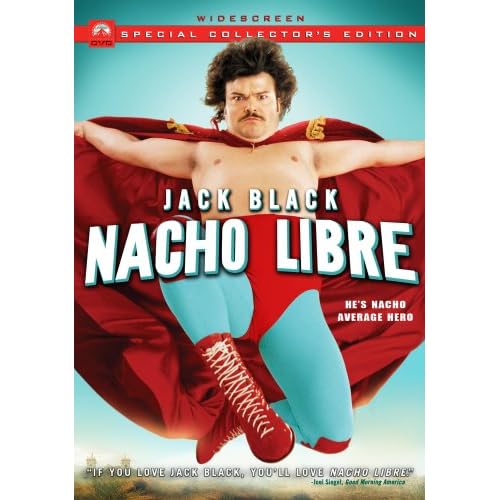
Nacho Libre

Image from Amazon

My friend Arc does movie reviews. He is the expert on this topic but I am taking a page from his book today to comment on Nacho Libre.

Nacho Libre is one of those movies you either have or love. Fans of Jack Black love it, others just despise it. Whatever the reason, if you like it because it made you laugh or hate it because of the slapstick comedic style, this movie will cause a reaction on you.

However, my reflection today deals with the prevalent mood of the movie. Nacho is a monk who has always been under the boot (or, rather, sandal) of the superiors in his monastery. Cruelty can be perceived in the lack of will of the monks and padres to improve the living conditions of the children (and monks and nuns) living under their care.

Nacho is the unlikely hero, the underdog, who through living his dream of becoming a luchador manages to bring some joy (and food) to the orphans, who prove to be his strong allies.

Nacho's love interest, the lovely nun played by Ana de la Reguera is another victim of this cruel system; she seems to be interested in a life outside of her little cell but is too afraid to try. In the end, Nacho does not get the girl which seems to have pissed everyone off (the viewers, of course) but just goes on to show the stronghold and fear the church can muster.

Fear of what I would ask? Nacho is always afraid his secret identity will be revealed and when it is discovered, he leaves before risking the consequences.

Nacho's sidekick, Esqueleto, is both providing the comic realief and the food for thought. When asked if he is a believer he responds "I only believe in science!"

Which is very ironic because obviously Esqueleto is uneducated. Which makes you wonder if the intention was to show how even uneducated, simple minds like Esqueleto's should reject the charade being played by organized religion. Nacho and sister Encarnación have no choice, they were indoctrinated from an early age but Esqueleto is a free agent and has a mind of his own.

As we all should have.


Share on Facebook

More reader comments: problems with the pope

Very often, people do not leave comments on my blog but rather post the comments to Facebook or e-mail them to me.

That is what happened a few days ago, when my posting trying to show what an ad-hominem fallacy was attracted the attention (and disagreement) of my FB friend Robert.

I find Robert's comments intriguing and engaging. His argument is that it may be impossible to separate the man from the ideas:

About the pope: "...He's led a campaign to maintain poverty in South America, spreads fatal diseases to millions by teaching them to have unprotected sex, and was one of the key people who arranged for paedophiles to be protected and witnesses (mostly raped children) to be intimidated into silence, which led to further child rape and the rapists themselves escaping justice. How can anyone /not/ have a problem with the pope?"

To which I (maybe naively) responded: "...I was discussing ad hominem fallacies so it is the ideas we have to go after... for all we know the guy's intentions may be good, as twisted as that may seem..."

Robert's reasoning was implacable. "By that logic we'd be letting Hitler and a whole bunch of other villains off the hook. It's not just the intention that matters, it's knowledge and awareness about what harm you are doing, as well as how you go about doing it. He opposed the anti-poverty campaign in South America because living in a wealthier environment would make them less ... Read More religious. Now it's well-known that being wealthy is no barrier to being religious, as America has shown, so instead of trying to guide them down that route he instead chose to keep them living in conditions that made them poorer, less healthy and unhappier. When it came to contraception in Africa, he could have told the truth about condoms and distributed them from churches, increasing attendence and saving lives at the same time. When a system-wide level of corruption was found in the church he could have led the charge to have them excommunicated and brought them to justice, placing the feelings of the innocent and justice above the church's power. However, in every instance where he could have done things differently that led to the church remaining strong and done a lot of good for the world he chose the option that led to an enormous amount of suffering, just so that the catholic church could get stronger. Because of his evil ways at least 4 continents have suffered, just for the sake of making the vatican more powerful."

I understand what he is talking about and tend to agree. Maybe we should be more careful of where we may place sympathies... I have indeed reflected on how pope Ratzinger, being such an erudite, must know the things I know about the bible and the history of the church and yet continues to preach strict adherence to catholic dogma... A true contradiction, in my book.


Share on Facebook

Reader's comments - WWJD

My friend Francisco wanted to comment but his comment was too long, so he e-mailed it to me. Here is his comment.

In reading the blog “WWJD or Shakespeare”, I found it certainly amusing –as the blogger said it -, interesting, and maybe worth it to write about it; not with the purpose to oppose those ideas; but to expose and brainstorm other ones that shed some light toward the ultimate goal of a common agreement to the Truth. Please note that my native language is not the English; so, please accept my sincere apologies for not using the adequate terms as my inner self understands it. In the “physical world” we are situated in, the reality we perceive, the events, at least according to the Newtonian description of the universe, and later the Theory of Relativity, – another completely different story would be according to the Quantum Mechanics - is a succession, a series, of individual events that takes you to a particular one that usually is the result of a n-variables. To gain understanding of a situation or a problem, one should assign values to one variable while leaving the other variables constant. So, refering to the passage in the gospel of Matthew 15: 21 and on, the woman from Canaan, it should be analyzed from different points of view; then, decide if “it is not good behavior”; or maybe that is not the issue at hand; or maybe the teaching is a different matter. To understand what really was going on in this part, we could analyze it from the social, political, economic, spiritual, moral, philosofical, teological, religious, even personal – what means to me –, etc. point of view. As a matter of fact, the Catholic Church teaches one can distinguish between two senses of Scripture: the literal and the spiritual. The spiritual is even further divided into the allegorical, moral, and anagogical senses. The moral sense should lead us to act justly; hence, the related passage was written for our instruction as well. The anagogical sense can view realities and events in terms of their eternal significance, so it is its applicability (1). One thing the reader of the gospel according to Matthew should know is that Matthew – or whoever did it - wrote the gospel for the Jewish people of that time, centering the attention on the elite, in terms they could relate and understand the proper way of the “good news”. In other words, the audience was very well verse in the Scriptures, customs, and values fostered throughout many centuries; and the things familiar to the Jewish people were challenged and radically changed. Politically, they were subjugated and slaved by the Roman imperial power that imposed the corrupt government authorities; they wanted a change. Religiously, they were guided by an authority sect that believed to be the cleanest one and “maestros” with strict adherence to Torah, God’s laws, and Moses’ rules to the point they regarded the rest – outside of the Pharisee sect – unclean people and punish them for their transgression; thus, forgetting the true meaning and intention of the Law and rules. Spiritually, the Jewish people, in general, in the region of Canaan were dead. They knew about the Scriptures, the expected Messiah, etc; nevertheless, they were still influenced by years of slavery and captivity from Babylonia. They’ve had physically returned to the land, but remained spiritually slave. In the other hand, the Canaanites were counted among the gentiles whom failed to recognize the Only One and True God as opposed to the Israelites acknowledgement of this key principle; hence, the favor of God’s will. Without this understanding there is a risk of missing the point and can prompt the reaction such as the blogger’s, especially taking in consideration the mind set of our western culture of our epoch. The passage of the Canaanite’s woman faith set the stage, as it is in many other opportunities of Jesus’s ministry, and anticipates the mission to the Gentiles: The Plan is not exclusive for the Jews, but it is extended to all the humanity. The Canaanite woman obtained the healing for her daughter by becoming a believer and by the virtue of her strong faith. Maybe the teaching is that we may have relaxed what God expect from us in our lives - and from the entire humankind - by contrasting the view on the dead-letter of the Law and the New Covenant. The instruction is to have faith and it is valid now and then. Indeed the Shakespeare’s sonnet is beautiful, but I’m still asking myself as to why the reference or comparison to the theme. Is it because ii is more likeable than the other literature? I can see that Shakespeare has the ability to exalt and compare the beauty of the Creation with words that comes from its inner self. And, I’m pretty sure the priest failed to convey the proper message to some of the audience that left the feeling of having to endure the mass; but this is different subject. Nonetheless, the Word did not go empty since we are still blogging about it. That’s good!

(1) Catechism of the Catholic Church


Share on Facebook

Who, me? I don't have a problem with the pope!

Some days ago I was told (she said he said, that kind of stuff) that a friend thought that I had an issue with the pope.

The comment made me laugh but, thinking it over, it is a serious matter.

Probably this friend saw my blog post titled "Condones para el papa" (Condoms for the pope) in which I criticized the pope's statements during that recent, infamous trip to Africa. And this will show the difference between debating a person's ideas and attacking the person.

When ideas are debated, arguments must be used to show the falsehood or impropriety of someone's statetements. Using personal attacks (ad hominem) is not proof that said ideas are wrong.

For instance, if someone comented on this note saying that I am a hard core atheist and that is why I don't like the pope, he would be mounting a personal attack and not debating the correctness of my ideas. I always try to make clear, when criticizing someone's ideas, that it is the ideas I debate, not the person.

In the case of pope Ratzinger, I really sympathize with him. Joseph Ratzinger is a man who has found himself in a difficult situation for which he was not the best equipped person. While the previous pope, Karol Wojtyla better known as John Paul II, had the opportunity to polish his diplomatic skills fighting communism in his native Poland, pope Ratzinger is an academic, who would be content teaching at a university or writing theological treatises on the catholic church doctrine, which is his specialty. Being the head of the church has put him on the spotlight and his tendency to openly speak his mind on catholic dogma issues has gotten him into problems like the one that caused my criticism.

So, trying to prove an idea wrong by using personal attacks is what is called an ad hominem fallacy.

I don't have a problem with pope Ratzinger. I have a problem with his ideas.

This is a free translation of my post yesterday at El Chapín Escéptico (in spanish). I thought it fit well with The Chapin Skeptic.


Share on Facebook

WWJD or Shakespeare??

Blogging is a funny thing. Sometimes what you first think of is not what you eventually post. Sometimes the topic takes you elsewhere. And sometimes you change your mind before you even post.

And then sometimes you just can't make up your mind.

Today I had to endure mass. No need to explain why, I tried to get in late but was actually on time and it took 50 minutes, which was long for a weekday mass. The priest's homily upset me. He was commenting on the gospel reading (Matthew 15 - 21 and on, the woman from Canaan) and of course he embellished the story by making it appear as a lesson on perseverance. For some reason that I cannot fathom, You Must Persevere When Asking Things Of God.

That is not what the gospel says. If anything, those people asking themselves all the time what would Jesus do (WWJD) should realize this is not good behavior.

Jesus did not want to help the canaanite woman because she was not jew. (No, I am not going to quote scripture here - read the passage elsewhere as I have placed a link to it above). Of course, in light of the mindset of jewish Jesus and his jewish disciples, he was not doing anything wrong - the gospel was to be preached to the jew people, not to the outsiders, who were not "worthy".

That was OK for the jews at that time in that place. It would be bigotry today. So if you are asking yourself WWJD, he would show you how to be racist and intolerant.

Anyway, on the way home my daughter asked me for help doing homework, she had to paraphrase one of Shakespeare's sonnets. I never studied english literature (didn't have to... I studied spanish and latin american literature...) so I have never really read Shakespeare in the original english.

And it made up for my 50 minutes at church. And I will quote Shakespeare here for your enjoyment. What a beautiful little poem of love!

SONNET 18
Shall I compare thee to a summer's day?
Thou art more lovely and more temperate:
Rough winds do shake the darling buds of May,
And summer's lease hath all too short a date:
Sometime too hot the eye of heaven shines,
And often is his gold complexion dimm'd;
And every fair from fair sometime declines,
By chance or nature's changing course untrimm'd;
But thy eternal summer shall not fade
Nor lose possession of that fair thou owest;
Nor shall Death brag thou wander'st in his shade,
When in eternal lines to time thou growest:
So long as men can breathe or eyes can see,
So long lives this and this gives life to thee


Share on Facebook

2012 and the end of the world

This morning I was listening to the NPR news and they mentioned the Mayas and 2012 and the end of the world

I do have a comment to make about that:

zzzzzzzzzzzzzzzzzzzzzzzzzzzzzzzzzzzzzzzzzzzzzzzzzzzzzzzzzzzzzzzzzzzzzzzzzzzzzzzzzzzzzzzzzzzzzzzzzzzzzzzzzzzzzzzzzzzzzzzzzzzzzzzzzzzzzzzzzzzzzzzzzzzzzzzzzzzzzzzzzzzzzzzzzzzzzzzzzzzzzzzzzzzzzzzzzzzzzzzzzzzzzzzzzzzzzzzzzzzzzzzzzzzzzzzzzzzzzzzzzzzzzzzzzzzzzzzzzzzzzzzzzzzzzzzzzzzzzzzzzzzzzzzzzzzzzzzzzzzzzzzzz...

...Sorry, where was I?

Mr. Deity is back...! and He is watching me!

I have made a momentous decision today: I am officially shifting my allegiance from the mighty Flying Spaghetti Monster to Mr. Deity.

After all, he is the Deity...

Mr. Deity came upon us via the glorious service that we mortals denominate YouTube. His Word spread far and wide about two years ago with a series of memorable and wise short Videos each containing about 5 minutes of His Allmightiness. I learned much of the world we live in and how we came to be by watching His Performances. That was Season One.

Illumination came upon Crackle, a service owned by Sony, whereupon they were bestowed the opportunity to collaborate with the production of 10 more short Stories. Hence, Season Two of Mr. Deity came to pass.

Alas, Crackle has abandoned the Path and Mr. Deity is now requesting our help by donating via PayPal to his Noble Cause. I wonder, if Mormons tithe 10% of their earnings, how come we of other Non-Faiths cannot come with some help for our very own Deity?

In answer to our prayers and counting on our good Intentions, Mr. Deity is back in all His Allmightiness and Wit on Season Three. He comes to us with all of his good Allies that we have come to know and love: Larry, his faithful assistant, Jesse (or Jesus, depending on the time of the day) and the always beautiful Lucy(fer).

As a member of His Flock, I vow to watch his Videos as they come out, PayPal some monies but not much, and never leave Him any voice mail by never praying to Him. I am very happy he will not turn on his Omniscience and leave me alone and never worry about me!

So, come see the light. Check out Mr. Deity, donate and purchase His Merchandise. I never did like all that old pirate stuff and the global warming and all so I am much more comfortable with Mr. Deity. And I know He Will Read my blog since he is now following it in Facebook's Networked Blogs... Could I be more Honored?

After all, he is the Deity... and he is on iTunes as well. What more can you pray for?


A reluctant atheist?


I recently went to the cinema to watch Angels and demons. I enjoyed reading the book, which was a fantastic thriller, and enjoyed the movie, which is no less of a thriller than the book.

Cinematic emotions aside, I found it intriguing when Tom Hanks' character, Robert Langdon, gets asked by a priest "Do you believe in God, Mr. Langdon?"

His very diplomatic answer was "I am an academic... My mind tells me that I will never understand God." The priest then asks "And what does your heart say?" to which Langdon responds "My heart tells me I am not meant to...

In these days of personal domestic turmoil, my Angels and demons is stashed in a box out of reach so I could not inmmediately reference the dialog. But it seems that Langdon never uttered those words. Rather, it was CERN's scientist Vittoria Vetra who has a similar dialog in the book as you can see in this link. According to this article, Dan Brown is a believer which may be the reason his "atheist" characters are so reluctant to admit their lack of belief.

What Brown and the author of the article I am linking do not realize is that non-believers are many and are everywhere. As Richard Dawkins indicates in his http://www.outcampaign.org/ site "... atheists come in all shapes, sizes, colours and personalities. We are labourers and professionals. We are mothers, fathers, sons, daughters, sisters, brothers and grandparents. We are human (we are primates) and we are good friends and good citizens. We are good people who have no need to cling to the supernatural."

Given the current state of affairs, I can understand why so many atheists can be so reluctant to admit their non-belief. We are demonized every week in church by the priesthoood and are, very unjustly, blamed for the crime and evil in our world.

Nothing could be further from the truth. If anything, religion may be the real culprit.

I place a strong emphasis on good friends, good citizens and good people. And it looks like popular media is now begining to portrait atheists in a more favorable manner - check the popular TV series House and Bones, where the main characters are very strong atheists.

Like the Gay movement did many years ago, non-believers need to begin working on our image to change the perception that we eat babies for breakfast. We are good people. And we are many.

Join the Out Campaign. Or, if you are a believer, don't hold it against us.